“Ahhh! Ahhh!” – What comes to mind when you hear a child shout in a crowd?
*Sharing from a saigonchildren’s staff.
During the break at a special camp organised by saigonchildren for children in the Early Intervention (EI) class, one child’s repeated cries caught my attention.
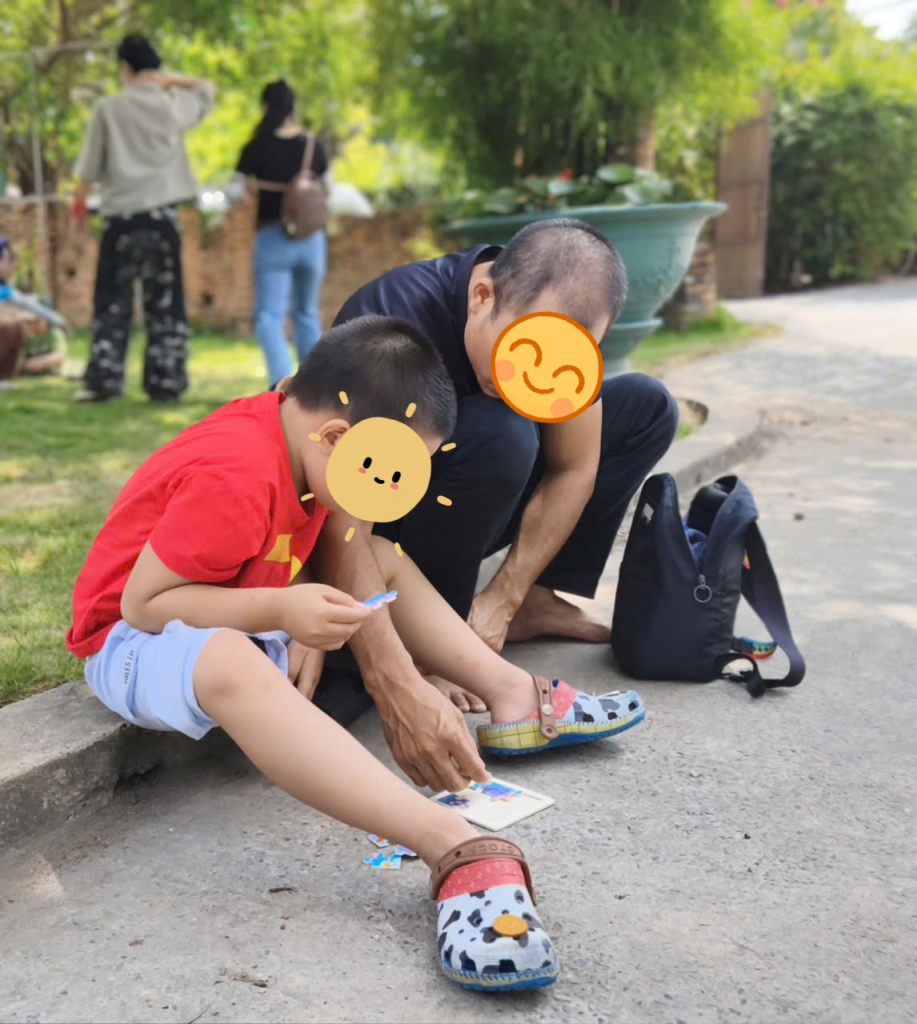
As I came closer, I saw it was K., who would sometimes cry out while playing a puzzle game with his father.
“K., let’s do the puzzle with Dad.” “Do you need help?” “Have a think.” “You can do it.” “Last piece. Yay!”
The picture K. was putting together wasn’t big, just nine small pieces. For many seven-year-olds like K., this would not be difficult. But for K., a child with neurodevelopmental difference, it was a challenge.
In his early days at the EI class two years ago, K.’s biggest difficulties were managing his emotions, cooperating with others, and sustaining attention during activities.
A puzzle game, in fact, is a test of attention, patience, and emotional regulation, exactly the areas K. found challenging.
While playing, there were moments when K. grew impatient and cried out “A! A!”. But with his father’s encouragement, he kept trying.
If it were me in the past, hearing a child shout in a crowd, I might have seen those “A! A!” sounds as unusual, perhaps a lack of control, or simply a “naughty child”.
But since working at saigonchildren, and learning about Special Needs Education Programme and the idea of neurodiversity, I’ve come to understand that every child’s brain works in its own way. Some children may not yet be able to express their needs through words, and instead respond through actions.
This can make others feel unsure how to interact, and it’s easy for the community to misunderstand and label these children as disruptive or stubborn.
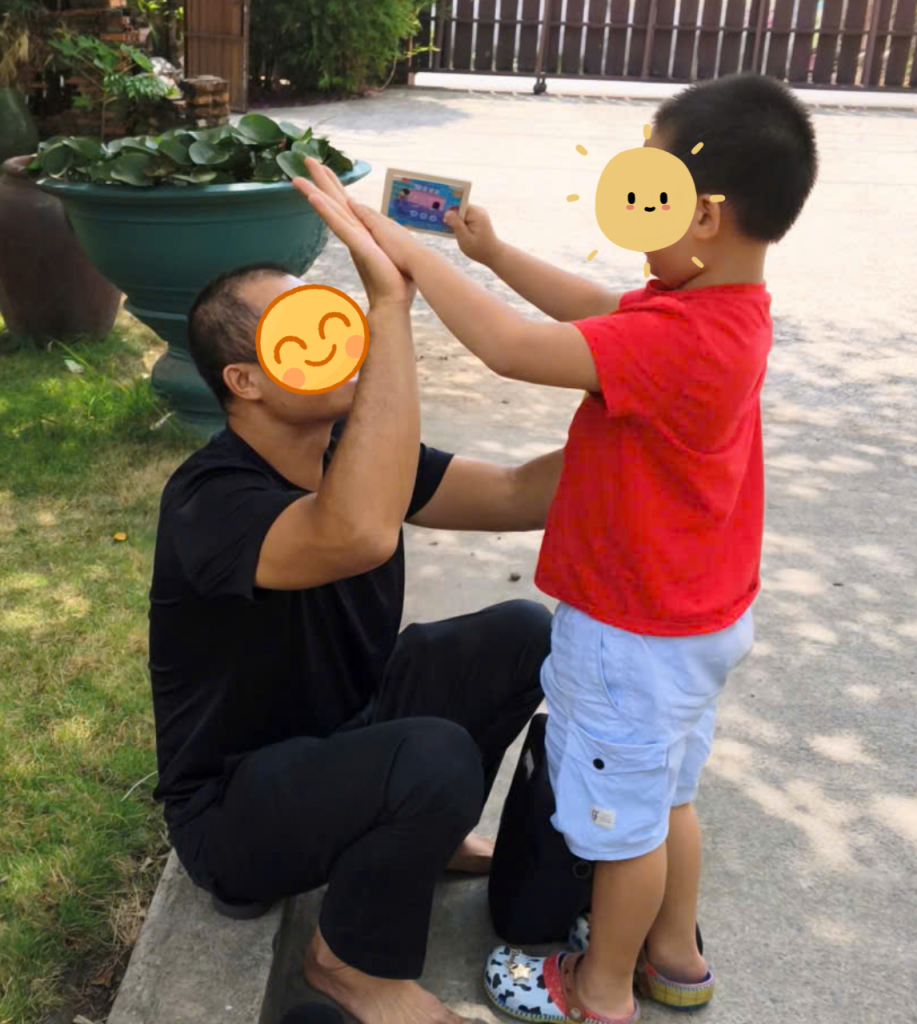
Like K., his “A! A!” may simply come from not yet fully managing his emotions when trying to stay focused. And yet, despite those moments, with his father’s support, he patiently completed the puzzle, and happily high-fived his dad when the final piece clicked into place.
Now, K. has “graduated” from the EI class and started primary school. With support from his teachers and peers, he is integrating quite well.
For a child to thrive, professional intervention is not enough. It also takes understanding and support from the whole community.
When we come across a child’s behaviour, whether it is avoidance, repetition, or a strong reaction, if we pause for a moment and remember: this may simply be how the child is trying to adapt, to find a sense of safety, or to express a need in their own way, then we can begin to see with more empathy, and support them better.
I hope that every child, like K., no matter their differences, can grow up carefree and joyful, supported by the understanding of their family and those around them.
And this can only happen if all of us – you, me, everyone – take the time to learn and share this message.
This April, during World Autism Awareness Month, perhaps you could spend a little time learning more about neurodiversity, or simply share K.’s small story with those around you.

Oanh’s story: Education for a future of her own choosing

“I just knew I had to keep studying and work hard to move forward.”

“The me from three years ago must be proud of who I am today.”
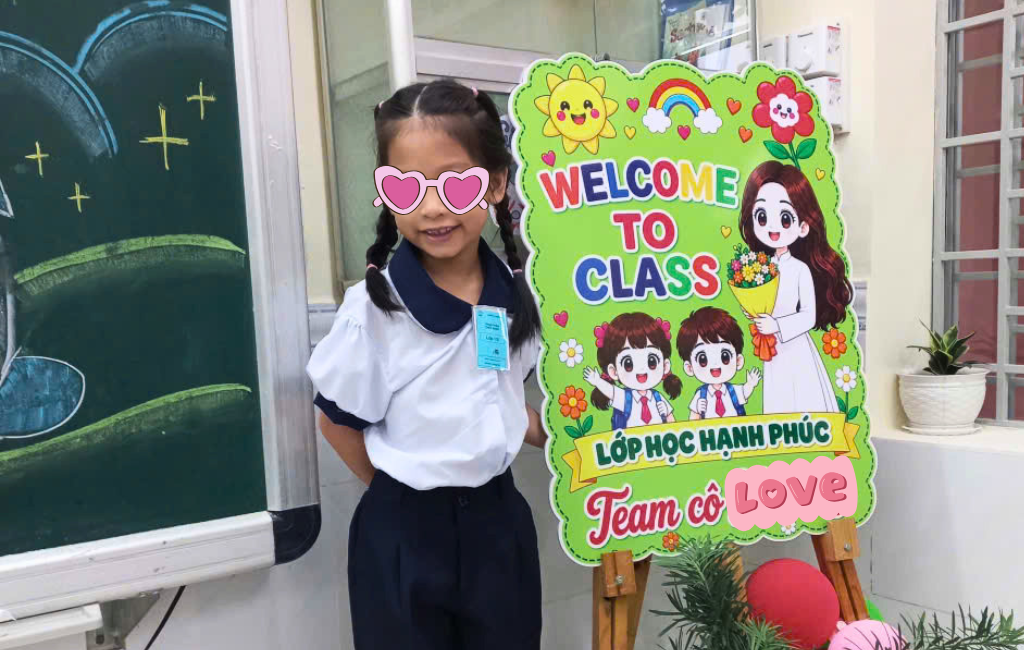
This morning, D. got herself ready for school
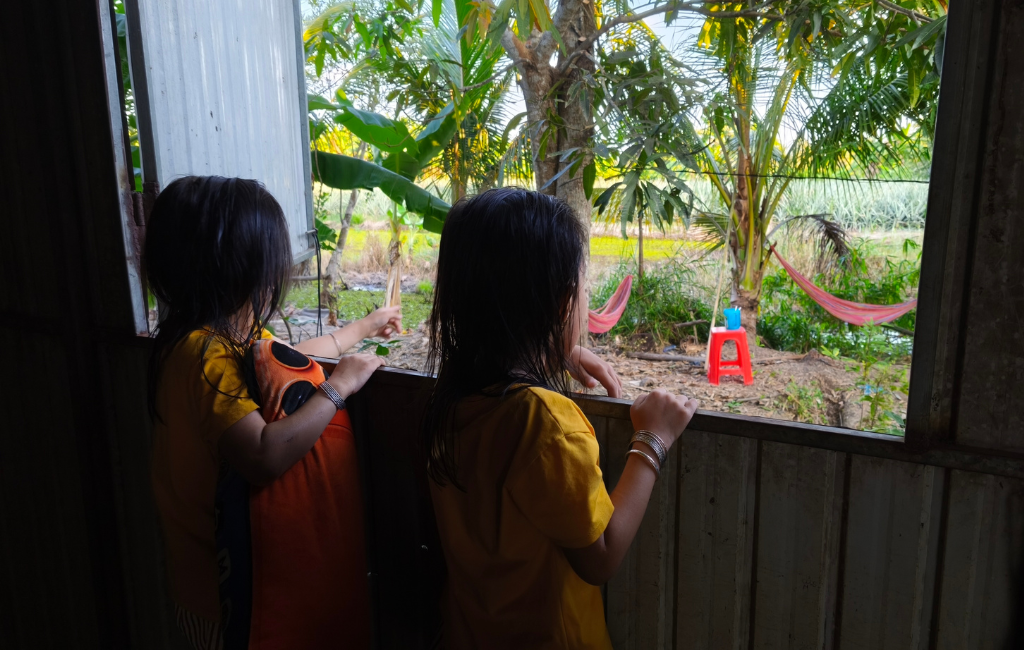
Finding family warmth when parents work far from home
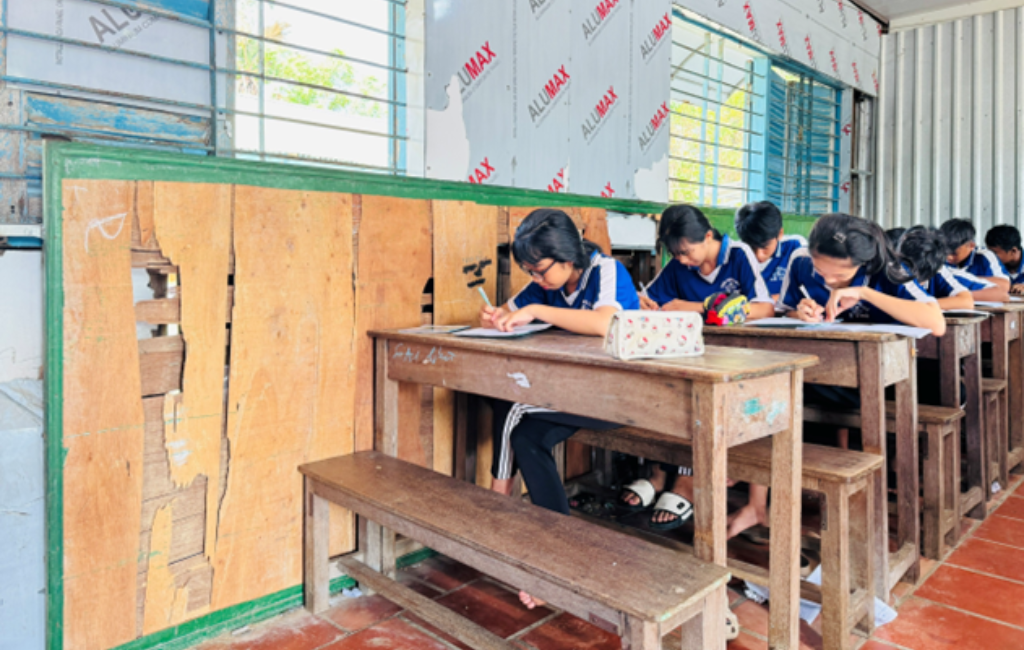
What does a “less advantaged starting point” look like?
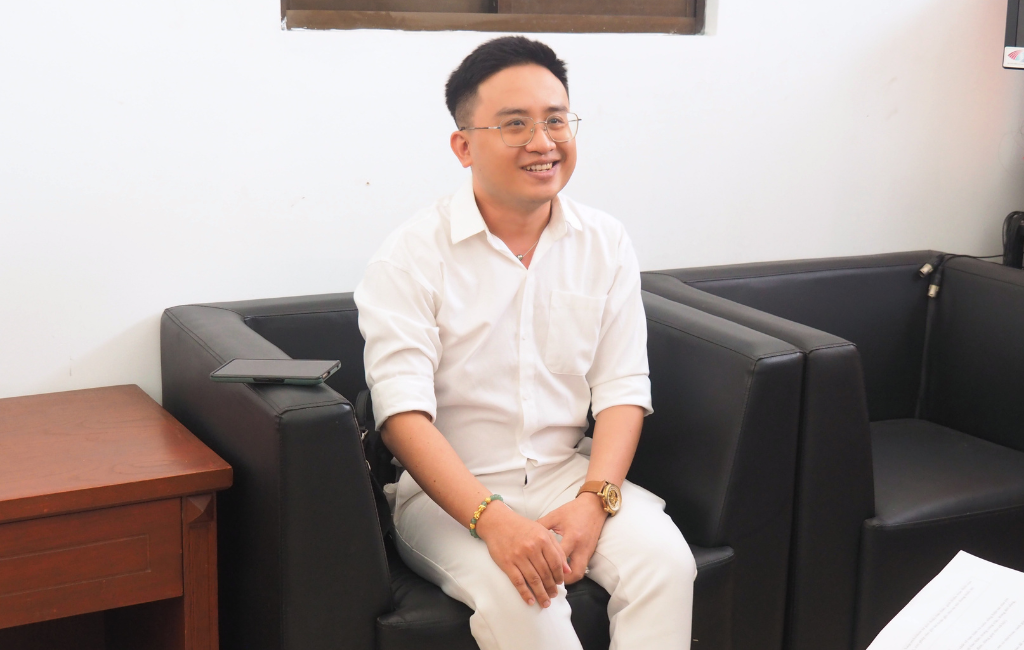
Duc Loi’s story: An opportunity that changed a life
When trust lights the way, dreams can bloom

When education and empathy allow ‘tough shells’ to bloom
11 years of scholarships, a journey home: Miên becomes a doctor in Vĩnh Long
-
Quick links
-
Contact Us
- Saigon Children's Charity CIO
- 59 Tran Quoc Thao
- Xuan Hoa Ward, Ho Chi Minh City
- Tel: +84 28 3930 3502
- Fax: +84 28 3930 3503
- www.saigonchildren.com
-
Subscribe to our newsletter