School Toilets in Rural Vietnam: How Hygiene and Safety Make a Difference
Guest article by Mia Nguyen.
In 2017, a five-year-old boy from Dak Lak cracked his skull and pelvis after the restroom floor at his kindergarten collapsed and sent him down a five-meter pit. This regrettable incident once again brought to light the issue of unsafe and unhygienic school toilets in rural Vietnamese provinces. In the accident, there were no slabs underneath to support the pit latrines. More alarmingly, the kindergarten’s bathrooms had not been renovated in nearly a decade. Although we tend to overlook the importance of toilets in our daily lives, the scarcity of decent sanitation facilities is, in fact, affecting the wellbeing and education of millions of students in rural Vietnam.
The majority of school toilets in rural areas share the same issues: they are either in gradually worsening conditions or are absent altogether in many locations. Dirty latrines, rusty water taps, and a lack of soap for handwashing are some of the recurring issues that contribute to the squalid conditions of school toilets. Many remote areas do not even have sustained access to clean water supply.
Moreover, the rising demand for education in rural areas places great stress on school sanitation facilities, which do not meet the basic standards for school infrastructure imposed by the government in the first place. Due to the overwhelming number of students, school toilets are under pressure from constant overuse. Despite the addition of new toilets built from donations made by volunteer organizations, many of them are in a run-down state due to lack of maintenance.
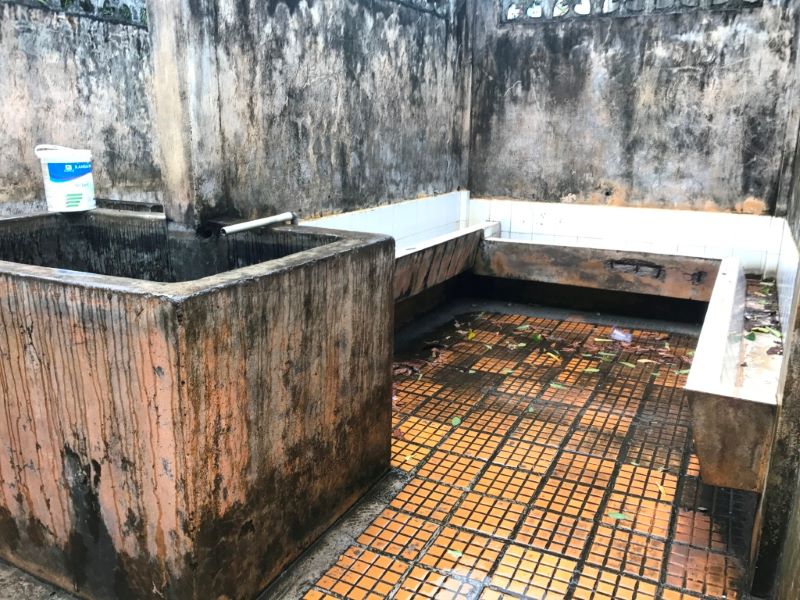
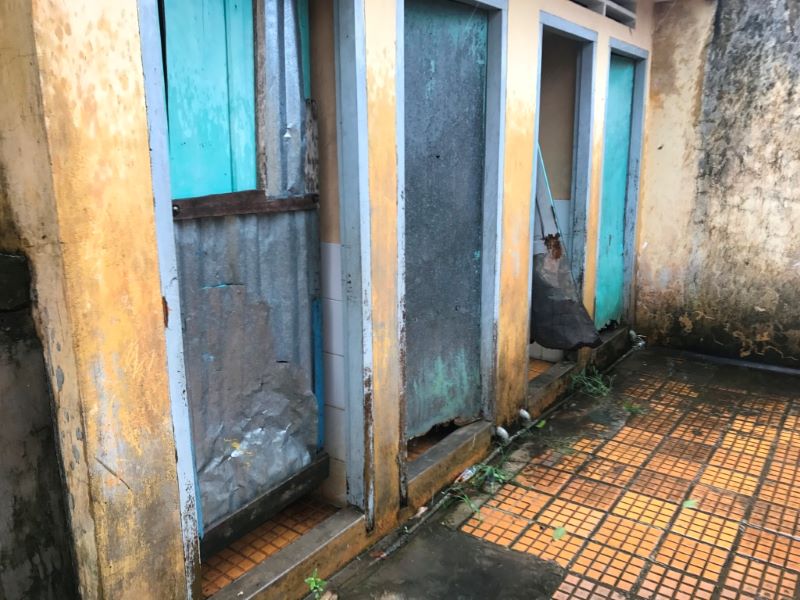
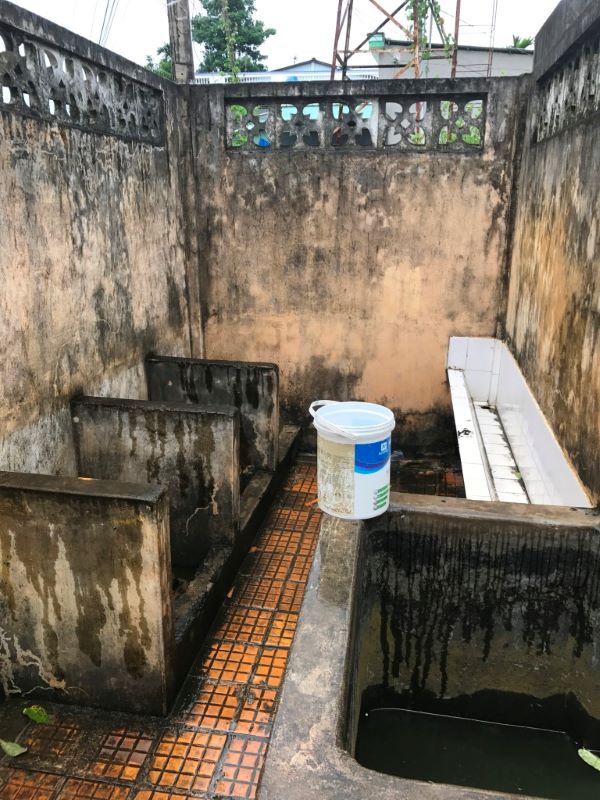
“Before’ photos of the toilet in one of the schools that saigonchildren has built
These conditions have brought serious risks and inconvenience upon many members of the community, including parents, teachers, and, most importantly, the students themselves. Dreading the smell or heat of their school bathrooms, many student refuse to go to the toilet at school and hold out for hours. Another concern originating from this issue is the safety of young students who have to use toilets built in remote and sketchy locations with the presence of potential kidnappers or abusers.
Above all, sub-standard sanitation facilities seriously compromise the health and wellbeing of the most vulnerable members of the community. Without proper facilities, students are forced to practice poor sanitary behaviours such as open defecation and urination, which can contaminate the environment and facilitate the spread of diseases like flu, diarrhea, and parasitic worms. Students and teachers who have to share school bathrooms daily can be exposed to various kinds of bacteria and infections if the facilities are not well sanitised. In Vietnam, diarrhea is responsible for 10% of all deaths among children under five.
The seriousness of this problem must be fully recognized in light of events such as the COVID-19 pandemic, where poor sanitation poses significant threats to the public health system. Not only can improper hygienic conditions contribute to the spread of the virus, but sanitation-related cases can also overwhelm hospitals during the pandemic. Given the lack of medical facilities in rural and remote areas, when the number of infected cases rapidly rises, there would be insufficient hospitals with the right facilities and equipment to treat both hygiene-related diseases and COVID-19. The result is a vicious cycle of spikes in cases and strained hospital capacities.
Last year, brothers Tran Anh Bao and Tran Anh Kha from the An Giang province were inspired by UNICEF’s water and sanitation (WASH) program to build a toilet in their house, which significantly enhanced their family’s quality of life. Their story demonstrates the interconnectedness among the three factors of sanitation improvement: building, maintenance, and education. In other words, new toilets that are built should be properly maintained and regularly renovated, and children living in rural areas should be educated about personal and public hygiene. Moreover, this should be addressed as a public health issue since it requires mobilised funds from multiple sources to successfully spread awareness and improve the conditions of these sanitation facilities.
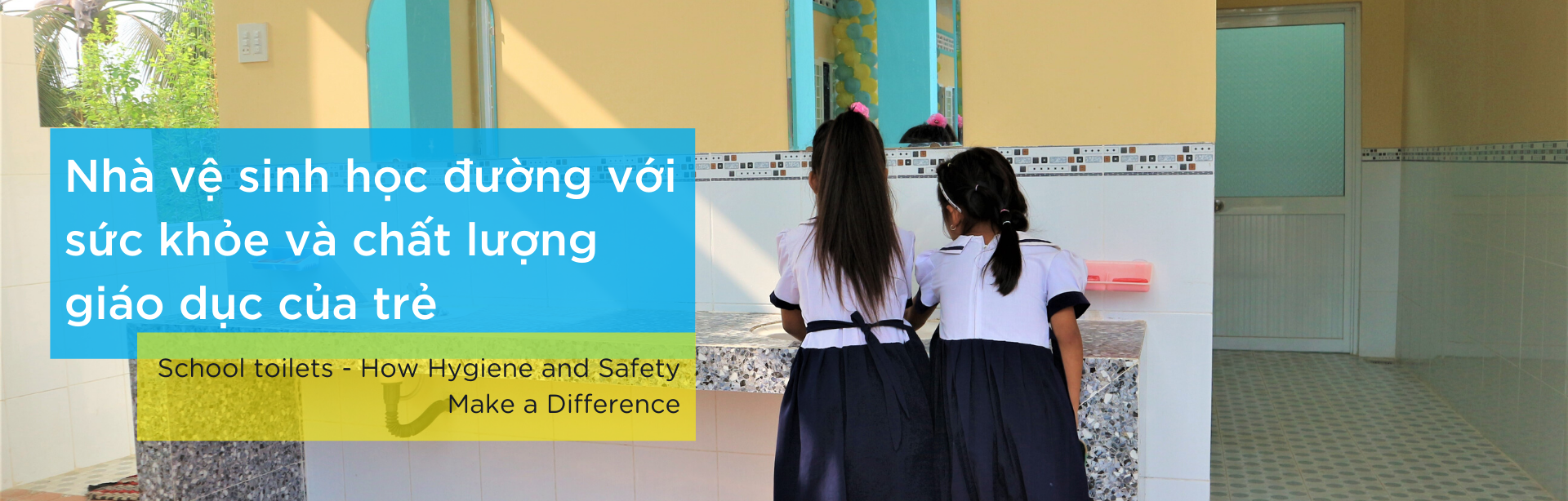
Saigonchildren’s School Building programme does not just work on renovating and building safe and reliable classrooms in rural schools but also focuses on replacing their run-down toilets with clean and thoughtfully designed toilet blocks. These positive changes will encourage students, especially girls who reach the age of puberty, to remain in school if they now have access to clean and safe school bathrooms. Children would also be able to form healthy sanitation habits from a young age and help in the promotion of hygiene practices in their communities. With better, cleaner, and more comfortable school infrastructure for students, the risks of diseases and infections would be significantly lower than before.


What saigonchildren built to replace the above-mentioned toilet block
“And I found another piece of the beautiful mosaic of my youth.”
PowHERful Summit 2026 inspires nearly 400 students and parents to explore STEM
A day of experiencing vibrant modern life and historical imprints in HCMC
Bringing STEM to nearly 1,000 students across the Mekong Delta

Graduation 2026: A new chapter begins for our 90 students
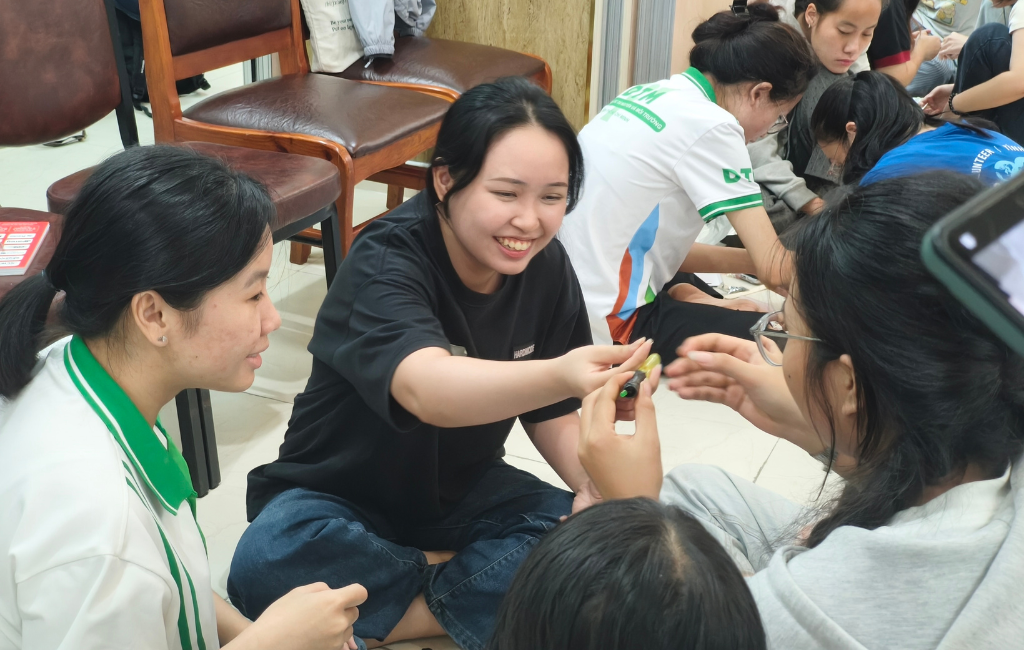
From Acronyms to Action: Empowering Female Students in STEM

Millions of Radiant Smiles Welcome Spring in Đồng Nai
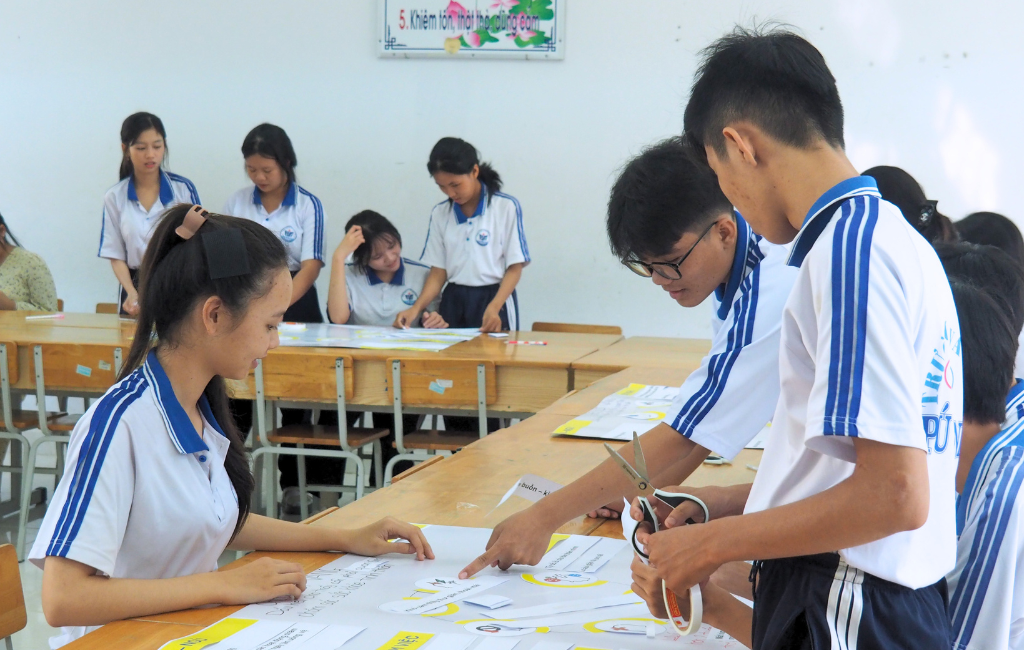
“Traffic light” of mental health

267 more dreams are taking flight on their university journey

Mid-Autumn cheer with nearly 400 students in Đồng Tháp
-
Quick links
-
Contact Us
- Saigon Children's Charity CIO
- 59 Tran Quoc Thao
- Xuan Hoa Ward, Ho Chi Minh City
- Tel: +84 28 3930 3502
- Fax: +84 28 3930 3503
- www.saigonchildren.com
-
Subscribe to our newsletter